




blood groups reagents, blood transfusion, reagents, medical laboratory equipment, lorne labs, blood grouping reagents

Quality reagents and medical laboratory equipment  services worldwide

Our products

Featured Product

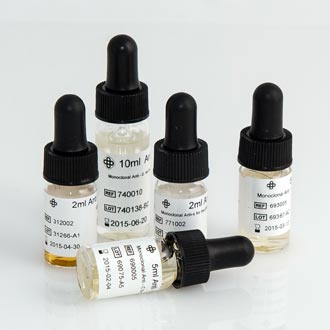
Anti e (Monoclonal) - 693

Levine and Stetson discovered the Rh blood group system in 1940. Apart from D the other major Rh antigens are C, E, c and e. The D antigen is highly immunogenic; the C and e antigens are less immunogenic than E and c. The corresponding antibodies are all clinically significant since they may cause both Transfusion Reactions and Haemolytic Disease of the Newborn.

Anti Jka - 323

The Jka and Jkb antigens were reported in 1951 and 1953 respectively. Anti-Jka and anti-Jkb can both show dosage and are notorious for their evanescence: antibody titres that rise after stimulation but quickly drop, often to undetectable levels. Kidd system antibodies have been implicated in delayed and immediate Haemolytic Transfusion Reactions and Haemolytic Disease of the Newborn.

Toxoplasmosis Latex Test Kit - 033

When used by the recommended techniques, latex particles in the reagent will agglutinate (clump) in the presence of Toxoplasma gondii antibodies. No agglutination generally indicates absence of the Toxoplasma antibody

ASO Latex Test Kit - 031

In acute streptococcal infections, anti-streptolysin O (ASO) is produced in response to streptolysin O antigens liberated by the bacteria. Information on extent and degree of infection can be obtained by measuring serum ASO levels. Elevated ASO levels have also been found in patients suffering from scarlet fever, acute rheumatoid arthritis, tonsillitis, and other streptococcal infections as well as in healthy carriers

Polyspecific A.H.G Elite (Clear) - 415

In 1945, Coombs, Mourant and Race described the use of anti-human globulin serum for detecting red cell-bound non-agglutinating antibodies. In 1957, Dacie et al showed that the antibodies present in antiglobulin sera were directed against certain components of complement. Anti-human globulin reagents detect non-agglutinating antibody molecules as well as molecules of complement attached to red cells following in vivo or in vitro antigen-antibody reactions.

Anti E (Monoclonal) - 691

Levine and Stetson discovered the Rh blood group system in 1940. Apart from D the other major Rh antigens are C, E, c and e. The D antigen is highly immunogenic; the C and e antigens are less immunogenic than E and c. The corresponding antibodies are all clinically significant since they may cause both Transfusion Reactions and Haemolytic Disease of the Newborn.

Inert Group AB Serum - 110

Inert AB serum is a serum derived from a pool of human plasma, which is used as negative control for IAT tests, enzyme tests and as diluent.


Anti k - 320

The K, k, Kpa and Kpb antigens were reported in 1946, 1949, 1957 and 1958 respectively. Kell system antigens are fully developed at birth and the K antigen is very immunogenic. Anti-K, anti-k, anti-Kpa and anti-Kpb have been implicated in Haemolytic Transfusion Reactions and Haemolytic Disease of the Newborn.

Polyspecific A.H.G Elite (Green) - 435

In 1945, Coombs, Mourant and Race described the use of anti-human globulin serum for detecting red cell-bound non-agglutinating antibodies. In 1957, Dacie et al showed that the antibodies present in antiglobulin sera were directed against certain components of complement. Anti-human globulin reagents detect non-agglutinating antibody molecules as well as molecules of complement attached to red cells following in vivo or in vitro antigen-antibody reactions.

Anti N Lectin - 312

The N antigen is part of the MNSs system and was reported in 1927. Anti-N generally reacts at room temperature and so is rarely implicated in Haemolytic Transfusion Reactions and Haemolytic Disease of the Newborn.

Monoclonal Anti Kell

The K antigen was reported in 1946. The antigen is fully developed at birth and can strongly be immunogenic. Anti-K has been implicated in Haemolytic transfusion reactions and haemolytic disease of the newborn.

Maxi Screen 3 - 950

Atypical antibodies, those other than anti-A or anti-B, are sometimes found in the serum of healthy donors and the random patient population. Many of these antibodies are of clinical significance as they may cause decreased red cell survival as the result of Haemolytic Transfusion Reactions, Haemolytic Disease of the Newborn or Auto Immune Haemolytic Anaemia and so identification of these antibodies is essential.

Preservacell - 980

Red cell suspensions can have their shelf life extended by being prepared in a suspending medium shown to extend their viability. Such preservative solutions work by providing the metabolic requirements of the red cells whilst preventing infection and maintaining antigenic expression.

Monoclonal Anti D (IGM) Clone 1 - 730

The Rh blood group system was discovered in 1940. The D antigen is the most clinically significant non-ABO red blood cell antigen and has been implicated in causing Haemolytic Transfusion Reactions and Haemolytic Disease of the Newborn.

Anti s - 314

The S and s antigens were reported in 1947 and 1951 respectively and form part of the MNS system. Anti-S and anti-s have both been implicated in Haemolytic Transfusion Reactions and Haemolytic Disease of the Newborn.

Anti A,B (Monoclonal)

In 1900, Landsteiner discovered the serum of some people would agglutinate the red cells of others. Four common phenotypes are now recognised: O, A, B and AB. Subgroups of A and B have since been identified.

L.I.S.S ADD

Reducing the ionic strength of a test system increases the rate of red blood cell antigen-antibody binding. Low and Messeter in 1974 showed that the use of a low ionic strength solution enhances the rate of antibody uptake in first stage of agglutination, allowing incubation times to be shortened.

Bovine Albumin 22%

Serological albumin was first recognised as a potentiator of certain antigen-antibody interactions in 1945 by Diamond. Since then, methods employing serological albumin have been widely used for the detection or quantitation of antibodies. Serological albumin has also been shown to enhance the sensitivity of the indirect antiglobulin test for some antibody specificities.

Anti P1 Monoclonal - 315

Landsteiner discovered the P1 antigen in 1927. Anti-P1 does not generally react above room temperature and may often go undetected in routine testing. Anti-P1 does not cause Haemolytic Disease of the Newborn and has only rarely been associated with Haemolytic Transfusion Reactions.

Red Cell Elute - 930

An antibody adsorbed onto red cells, either in vivo or in vitro, can be dissociated and recovered through elution. The eluate can then be used to identify a single antibody in multispecific sera, demonstrate the presence of a weak antigen, identify the antibody responsible for a positive direct antiglobulin test in acquired haemolytic anaemia or transfusion reaction, identify the antibodies causing haemolytic disease of the newborn or prepare specific antibody from sera containing unwanted antibodies.

Anti K - 760

The K, k, Kpa and Kpb antigens were reported in 1946, 1949, 1957 and 1958 respectively. Kell system antigens are fully developed at birth and the K antigen is very immunogenic. Anti-K, anti-k, anti-Kpa and anti-Kpb have been implicated in Haemolytic Transfusion Reactions and Haemolytic Disease of the Newborn.

Monoclonal Anti D (IGM) Clone 2 - 710

The Rh blood group system was discovered in 1940. The D antigen is the most clinically significant non-ABO red blood cell antigen and has been implicated in causing Haemolytic Transfusion Reactions and Haemolytic Disease of the Newborn.

Anti Lub - 331

The Lua and Lub antigens were reported in 1945. The expression of the antigens on the red cells can vary widely from person to person. Anti-Lua is not generally associated with Haemolytic Transfusion Reactions but anti-Lub has been. Both anti-Lua and anti-Lub have been implicated in Haemolytic Disease of Newborn.

Coombs Control Cells - 970

In 1945, Coombs, Mourant and Race described the use of anti-human globulin serum for detection of red cell-bound non-agglutinating antibodies and the antiglobulin (Coombs) test was rapidly applied. One cause of false negative antiglobulin tests is improper washing of the cells which results in free globulin molecules being present with supposedly washed cells and these globulins neutralise the antiglobulin serum when it is added. A negative result in an antiglobulin test should only occur when anti-human globulin is added to red cells that are not sensitised. To show that test cells were properly washed and that no neutralisation has occurred, antibody-coated cells are used as a positive indicator.

Anti Jkb - 324

The Jka and Jkb antigens were reported in 1951 and 1953 respectively. Anti-Jka and anti-Jkb can both show dosage and are notorious for their evanescence: antibody titres that rise after stimulation but quickly drop, often to undetectable levels. Kidd system antibodies have been implicated in delayed and immediate Haemolytic Transfusion Reactions and Haemolytic Disease of the Newborn.

Monoclonal Anti s

The S and s antigens were reported in 1947 and 1951 respectively and form part
of the MNS system. Anti-S and anti-s have both been implicated in Haemolytic
Transfusion Reactions and Haemolytic Disease of the Newborn.

Panenzyme - 441

Enzymes are particularly useful in detecting antibodies of the Rh system and offer a valuable addition to the range of serological techniques used for antibody identification, especially where it is suspected that there is a mixture of antibodies. Papain destroys certain blood group antigens, notably M, N, S, Fya, Fyb and Xga, a property that may be useful for identification and separation of mixed antibodies.

Anti c (Monoclonal) - 692

Levine and Stetson discovered the Rh blood group system in 1940. Apart from D the other major Rh antigens are C, E, c and e. The D antigen is highly immunogenic; the C and e antigens are less immunogenic than E and c. The corresponding antibodies are all clinically significant since they may cause both Transfusion Reactions and Haemolytic Disease of the Newborn.

Anti Leb (monoclonal)

The Lewis system antigens are not an integral part of the red cell membrane and are produced by tissue cells and found primarily in plasma and watery secretions. Red cells acquire Lewis antigens by absorption from surrounding plasma. The amount of Lewis antigen expressed on a cell can vary with the cell’s ABO phenotype. Anti-Lea and Anti-Leb have not been associated with Haemolytic Disease of the Newborn, but examples of Anti-Lea have caused Haemolytic Transfusion Reactions.

Anti B (Monoclonal)

In 1900, Landsteiner discovered the serum of some people would agglutinate the red cells of others. Four common phenotypes are now recognised: O, A, B and AB. Subgroups of A and B have since been identified.

Monospecific Anti Human C3d - 427

Without complement, sensitisation and agglutination by an antibody would be incomplete and ineffectual. The complement system proteins make up a highly complex system involving as many as 24 chemically and biologically distinct entities.

Osmotest - 820

Normal red cells show 50% haemolysis in a NaCl concentration of 0.40-0.445%, the median corpuscular fragility (MCF), and complete haemolysis in NaCl concentration of 0.20%. Hypochromic or thalassaemic cells show a greater resistance to hypotonicity, a decrease in osmotic fragility. Spheroid cells show less resistance to hypotonicity, an increase in osmotic fragility. After incubation at 37ºC for 24 hours, the MCF of normal red cells increases to 0.465-0.59% NaCl. The osmotic fragility of abnormal red cells may be reduced or abnormally increased after incubation at 37ºC.

Anti A1 Lectin

A1 antigen is a subgroup of A and was discovered in 1910. Anti-A1 is usually non-reactive at 37ºC, however examples reactive at 37ºC and predominately IgM can cause in vivo red blood cell destruction. About 78% of group A people are A1 and 22% are A2, similar proportions apply among AB people.

Anti Kpb - 322

The K, k, Kpa and Kpb antigens were reported in 1946, 1949, 1957 and 1958 respectively. Kell system antigens are fully developed at birth and the K antigen is very immunogenic. Anti-K, anti-k, anti-Kpa and anti-Kpb have been implicated in Haemolytic Transfusion Reactions and Haemolytic Disease of the Newborn.

Anti Kpa - 321

The K, k, Kpa and Kpb antigens were reported in 1946, 1949, 1957 and 1958 respectively. Kell system antigens are fully developed at birth and the K antigen is very immunogenic. Anti-K, anti-k, anti-Kpa and anti-Kpb have been implicated in Haemolytic Transfusion Reactions and Haemolytic Disease of the Newborn.

Bromelite - 443

Enzymes are particularly useful in detecting antibodies of the Rh system and offer a valuable addition to the range of serological techniques used for antibody identification, especially where it is suspected that there is a mixture of antibodies. Bromelain destroys certain blood group antigens, notably M, N, S, Fya, Fyb and Xga, a property that may be useful for identification and separation of mixed antibodies.

Anti C (Monoclonal) - 690

Levine and Stetson discovered the Rh blood group system in 1940. Apart from D the other major Rh antigens are C, E, c and e. The D antigen is highly immunogenic; the C and e antigens are less immunogenic than E and c. The corresponding antibodies are all clinically significant since they may cause both Transfusion Reactions and Haemolytic Disease of the Newborn.

Monoclonal Anti S

The S and s antigens were reported in 1947 and 1951 respectively and form part
of the MNS system. Anti-S and anti-s have both been implicated in Haemolytic
Transfusion Reactions and Haemolytic Disease of the Newborn.

RH Control Serum - 200

When cell suspensions from people with serum protein abnormalities or strongly positive direct antiglobulin tests are tested against Lorne IgG Rh Blood Grouping Reagents they may produce false positive reactions. This is due to the fact that these reagents are formulated with potentiators and contain high protein levels to enable the IgG antibodies to react in direct agglutination tests. The use of Rh-Hr Control Serum enables such false positive results to be recognised. A positive result with Rh-Hr Control Serum invalidates the results obtained with these Rh Grouping Reagents.

Anti Lea (monoclonal)

The Lewis system antigens are not an integral part of the red cell membrane and are produced by tissue cells and found primarily in plasma and watery secretions. Red cells acquire Lewis antigens by absorption from surrounding plasma. The amount of Lewis antigen expressed on a cell can vary with the cell’s ABO phenotype. Anti-Lea and Anti-Leb have not been associated with Haemolytic Disease of the Newborn, but examples of Anti-Lea have caused Haemolytic Transfusion Reactions.

Sickle Check - 875

Sickle-cell disease is a collective term for disorders resulting from the presence of sickle haemoglobin. Sickle trait, heterozygous state for sickle haemoglobin is relatively benign however laboratories are increasingly requested to carry out tests to detect the presence of sickle haemoglobin (HbS) on immigrant patients, particularly before any form of surgery. Sickle-cell thalassaemia and sickle-cell haemoglobin C disease have an intermediate severity. Sickle-cell anaemia, the homozygous state for sickle haemoglobin, varies in its severity according to its geographical location and is commonly associated with childhood death.

ABO Preservacell - 981

Red cell suspensions can have their shelf life extended by being prepared in a suspending medium shown to extend their viability. Such preservative solutions work by providing the metabolic requirements of the red cells whilst preventing infection and maintaining antigenic expression.

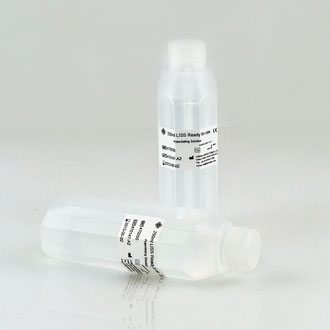
L.I.S.S Ready For Use

Reducing the ionic strength of a test system increases the rate of red blood cell antigen-antibody binding. Low and Messeter in 1974 showed that the use of a low ionic strength solution enhances the rate of antibody uptake in first stage of agglutination, allowing incubation times to be shortened.

Monoclonal Anti Fya - 774

The Fya and Fyb antigens were reported in 1950 and 1951 respectively. Anti-Fya and anti-Fyb have both been implicated in immediate and delayed Haemolytic Transfusion Reactions and Haemolytic Disease of the Newborn.

Anti Fyb - 317

The Fya and Fyb antigens were reported in 1950 and 1951 respectively. Anti-Fya and anti-Fyb have both been implicated in immediate and delayed Haemolytic Transfusion Reactions and Haemolytic Disease of the Newborn.

Anti H Lectin

The H antigen is part of the Hh system and is found on all red cells except those of Oh (hh) Bombay phenotype, which is extremely rare. H is the precursor of A and B and so group A and B people have less H than O people.

Anti IgG A.H.G (Clear) - 401

In 1945, Coombs, Mourant and Race described the use of anti-human globulin serum for detecting red cell-bound non-agglutinating antibodies.

Anti D Duoclone - 740

The Rh blood group system was discovered in 1940. The D antigen is the most clinically significant non-ABO red blood cell antigen and has been implicated in causing Haemolytic Transfusion Reactions and Haemolytic Disease of the Newborn.

Monoclonal Anti C+D+E - 700

Levine and Stetson discovered the Rh blood group system in 1940. Apart from D the other major Rh antigens are C, E, c and e. The D antigen is highly immunogenic; the C and e antigens are less immunogenic than E and c. The corresponding antibodies are all clinically significant since they may cause both Transfusion Reactions and Haemolytic Disease of the Newborn.

Negative Control - 650

False positive reactions rarely occur with monoclonal blood grouping reagents due to their low protein content. However, if a reagent control is required, e.g. when typing red cells from patients suspected of having auto-antibodies or serum protein abnormalities, Lorne Negative Control for Monoclonal Anti-D reagents is advised.

Distributors

Subscribe to the Lorne Newsletter. Please add your name and email address to receive the lorne labs newsletter.